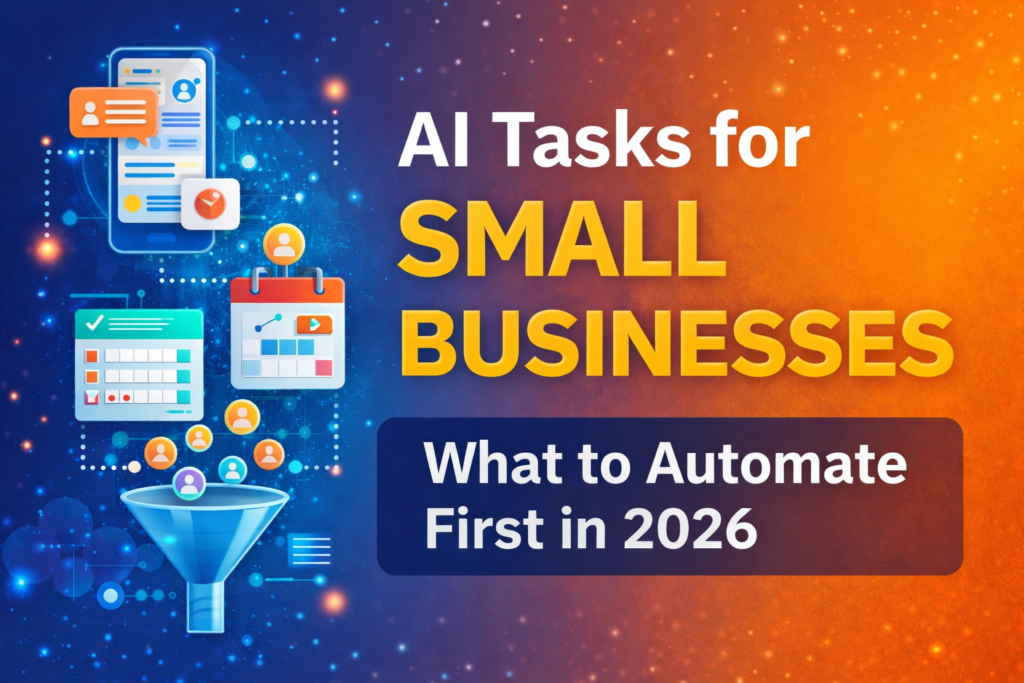
If you are looking into AI tasks for small businesses, the biggest question is not whether AI can help — it is where you should start. Many business owners hear about automation, but they are unsure which processes actually make a difference. Instead of trying to automate everything at once, the smarter approach is to focus on the right AI tasks for small businesses that save time, reduce friction, and improve how your business handles leads and daily operations.
What Are the Best AI Tasks for Small Businesses to Automate?
The best AI tasks for small businesses are the ones that:
- happen repeatedly
- take time away from revenue-generating work
- involve collecting or organizing information
- create delays in response or follow-up
These are usually found in the early stages of customer interaction and internal operations.
1. Customer Intake and Lead Collection
One of the first and most impactful AI tasks for small businesses is automating how new inquiries are handled.
Instead of relying on:
- missed calls
- incomplete forms
- delayed responses
AI can:
- respond instantly
- collect structured information
- qualify leads
- route inquiries properly
This is where AI intake automation becomes one of the highest-value starting points.
2. Appointment Scheduling
Scheduling is another area where small businesses lose time.
Manual scheduling leads to:
- back-and-forth communication
- missed opportunities
- inconsistent booking processes
AI can:
- handle scheduling requests
- sync availability
- reduce friction for customers
This improves both efficiency and customer experience.
3. Follow-Up and Lead Nurturing
Many businesses lose leads after the first interaction.
Common issues:
- slow follow-up
- forgotten inquiries
- inconsistent communication
AI can help by:
- sending automated follow-ups
- reminding prospects
- keeping communication consistent
This supports conversion without increasing manual workload.
4. Repetitive Customer Questions
If your team answers the same questions every day, that is a strong signal for automation.
Examples:
- pricing ranges
- service availability
- location coverage
- basic process questions
AI can handle these instantly, allowing your team to focus on more important conversations.
5. Internal Data Organization
Behind the scenes, many businesses struggle with:
- disorganized notes
- duplicate data entry
- inconsistent record keeping
AI can help structure and organize information so your systems are cleaner and easier to use.
Why Starting With the Right AI Tasks Matters
Trying to automate too much too quickly often leads to poor implementation.
The goal is not to “use AI everywhere.”
The goal is to:
- reduce friction
- save time
- improve response speed
- increase conversions
That is why starting with high-impact tasks like intake, scheduling, and follow-up creates better results.
How This Connects to AI Intake Automation
If you already have content around AI intake automation, this blog supports it by answering the next logical question:
“What should I automate first?”
In most cases, intake is one of the best starting points because it directly affects:
- lead capture
- response time
- customer experience
From there, businesses can expand into other areas like scheduling and follow-up.
AI Tasks for Small Businesses in DFW
In growing markets like DFW, competition is increasing across industries.
Businesses in cities like:
- Garland
- Mesquite
- Allen
are beginning to adopt automation not just to save time, but to stay competitive.
Customers expect:
- faster responses
- smoother processes
- less friction
Businesses that automate the right tasks early are better positioned to handle that demand.
Common Mistakes to Avoid
Even when choosing the right AI tasks for small businesses, implementation matters.
Avoid:
- automating without a clear workflow
- replacing human interaction completely
- using tools without proper setup
- ignoring customer experience
AI should support your business — not complicate it.
How to Decide What to Automate First
If you are unsure where to begin, look at your daily operations and ask:
- Where are we losing time?
- Where are leads slipping through?
- What tasks are repeated constantly?
- Where are delays hurting us?
Those answers usually point directly to the best starting point for automation.
Final Thoughts
The businesses that succeed with AI in 2026 are not the ones chasing trends.
They are the ones making practical improvements.
Starting with the right AI tasks for small businesses allows you to:
- save time
- improve efficiency
- increase lead capture
- scale more effectively
From there, you can expand into more advanced automation as your systems improve.
Need Help Deciding What to Automate?
Sanctus AI helps small businesses implement practical automation strategies that actually improve operations.
That includes:
- intake automation
- workflow optimization
- lead handling systems
- business process improvements
Learn more here:
https://ai.sanctus-solutions.com/
Best AI Intake Automation for Hurst TX Practices in 2026 – Sanctus AI
home – Sanctus Marketing
Or call: 972-728-1412